
Memorial Diamonds: Everything You Need to Know Before Choosing One

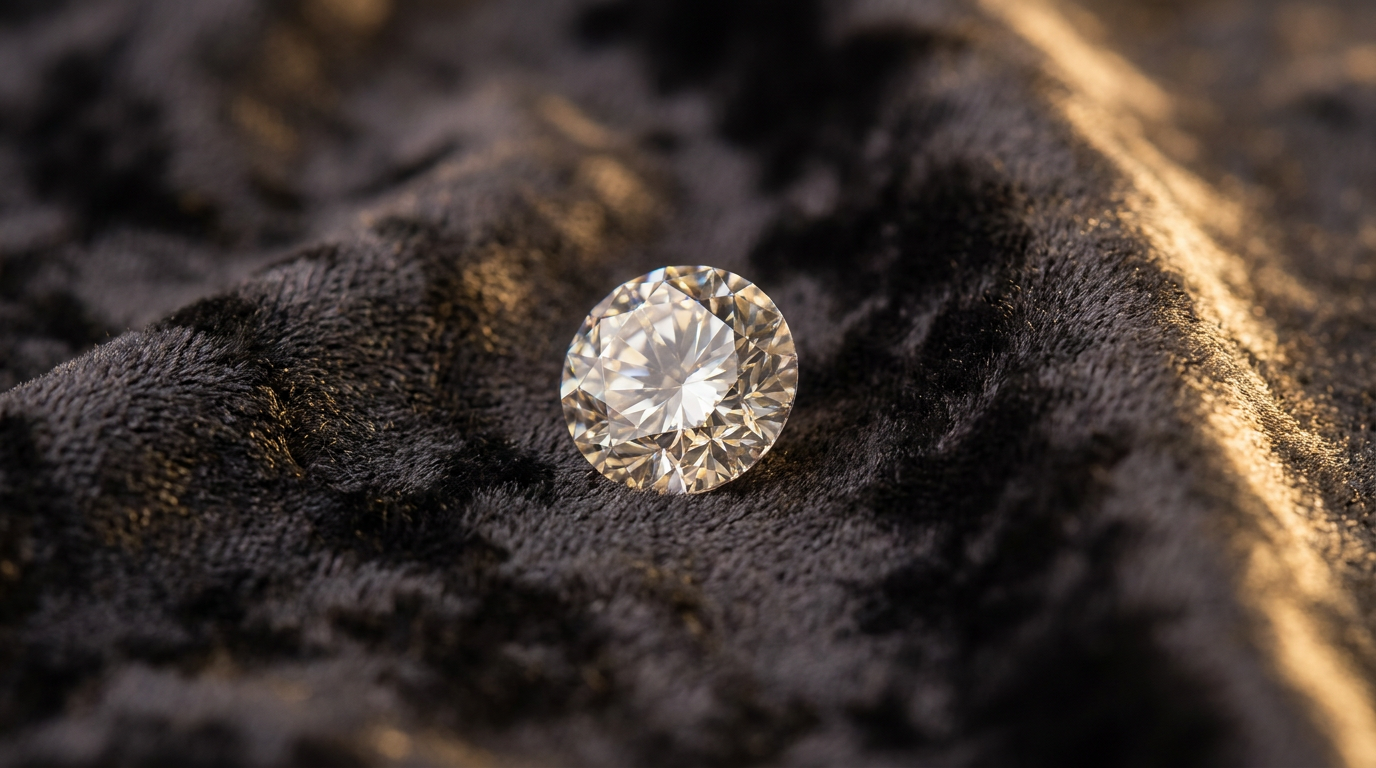
Some memories are too important to leave in a photograph or an urn. For many families, a memorial diamond becomes a way to carry someone forward — not as a replacement for grief, but as a lasting symbol of love. This guide walks through everything worth knowing before choosing one: how it's made, what shapes its cost, whether it's ethical, and how to choose a stone and setting that feels right.
What Is a Memorial Diamond?
A memorial diamond is a lab-grown diamond created using carbon sourced from a loved one's cremated remains or hair. It is not a simulant or imitation stone — physically, chemically, and optically, it is a genuine diamond, graded by the same standards as any other. The distinction from any other lab-grown diamond isn't in the crystal itself. It's in the carbon source used to grow it.
How Are Memorial Diamonds Created?
See our full process page and science page for more detail.
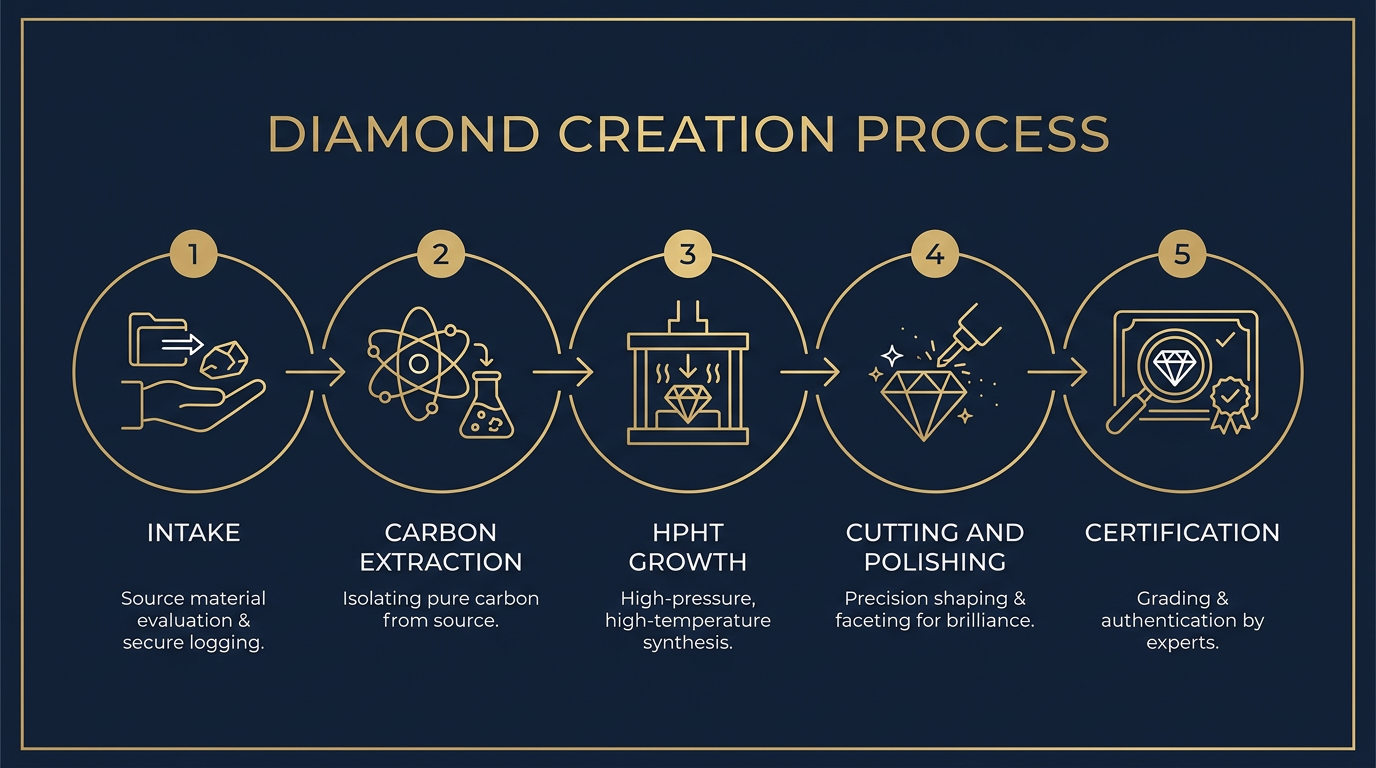
The process happens in five broad stages:
- Intake — ashes or hair are received and logged, ideally through a documented, traceable process from the moment they arrive.
- Carbon extraction — the sample is chemically purified to isolate carbon and convert it into graphite.
- HPHT growth — the graphite is dissolved in a molten metal flux inside a High Pressure, High Temperature press, at roughly 1,300–1,600°C and 5–6 GPa of pressure — recreating, under controlled lab conditions, the same fundamental environment that grows natural diamonds. The carbon crystallizes around a small diamond seed over a period of weeks to months.
- Cutting and polishing — the rough diamond is cut into the chosen shape by a skilled diamond cutter.
- Certification — the finished stone is independently graded for cut, colour, clarity, and carat.
Hair vs Ashes: What's Required?
Both work, but they aren't equivalent as carbon sources. Cremated remains retain a small percentage of carbon, present as carbonate in bone mineral — enough, in principle, to seed the growth process, though typically requiring a larger sample. Hair is a substantially richer carbon source by weight, which is why a much smaller quantity is usually sufficient. Hair also makes a "living memorial" possible — a diamond created from someone who is still alive, not only after death.
The Science Behind the Process — Told Honestly
The chemistry here is real and well documented: both cremated remains and hair contain carbon, and that carbon can be purified and grown into a diamond via HPHT, the same process used for lab-grown diamonds generally.
What is not scientifically provable is carbon origin after the fact. Research from McGill University's Office for Science and Society has examined this directly, noting that the industry's genuine vulnerability isn't the chemistry — it's that no forensic test can currently confirm, from a finished stone, whose carbon is inside it. Trust in this category rests on a provider's documented process, not on the stone alone.
We'd rather tell you this plainly than have you discover it elsewhere. It's also why we hold ourselves to a standard of showing you exactly how your material is handled, tracked, and processed — not just asking you to take our word for it.
Are Memorial Diamonds Ethical?
This deserves a direct answer, because the question comes up often and deserves better than a dismissive one.
The core ethical tension is the same provenance question raised above, taken to its sharpest form. An independent industry investigation published by Global Claims Associates argues that standard cremation may destroy most of the carbon in remains, and cites patent filings from within the industry that acknowledge supplementing with outside carbon may sometimes be necessary to reach a target size. This is a serious claim, and families deserve to know it exists, not have it hidden from them.
At the same time, other analyses note that cremated remains do retain a measurable amount of carbon (typically cited in the low single-digit percentage range by weight), which is a different conclusion than "virtually none." The honest position is that these two views are in real tension, and no independent, universally accepted forensic standard currently exists to settle it for any individual diamond. This is precisely why McGill's Office for Science and Society frames the issue as one of unverifiable provenance rather than settled fraud or settled legitimacy.
There is a second, separate ethical question worth naming honestly: pricing. Because a finished diamond cannot prove its own carbon origin, and because emotionally significant purchases are, by nature, made under emotional pressure, any provider in this category has a responsibility not to exploit that vulnerability with vague claims or inflated pricing that isn't justified by carat, cut, and process. We believe the only honest response to this is transparency — plainly stated pricing, a documented process, and a refusal to promise more certainty than the science can support.
A separate consideration exists for families with specific religious guidance on cremated remains. Some faith traditions have published formal positions on the handling of ashes after cremation, including guidance discouraging their division, retention in unconventional forms, or scattering. Families for whom this applies should weigh that guidance directly, ideally with a religious authority, rather than assume a memorial diamond provider's marketing has already accounted for it.
Memorial Diamonds vs Lab-Grown Diamonds: What's Actually Different?
It's worth being precise here, because the two terms get conflated. Every memorial diamond is a lab-grown diamond. Not every lab-grown diamond is a memorial diamond.
"Lab-grown" describes the manufacturing method — HPHT or CVD growth in a controlled facility rather than formation underground over geological time. "Memorial" describes the intended carbon source and emotional purpose of that specific stone. The growth process, the certification process, and the physical result are the same either way. What differs is the story behind the specific carbon used — and, as covered above, that story is the one part that can't be independently verified after the fact.
This matters practically: if cost is a primary concern, a standard lab-grown diamond of equivalent carat, cut, and colour will typically cost less than a memorial diamond, because the memorial process includes intake, carbon extraction, and chain-of-custody handling that a standard lab-grown diamond does not require. That difference in price should be understood as paying for the process and the intention, not for a provable material difference in the finished stone.
Common Myths About Memorial Diamonds
"They're just a marketing gimmick with no real science behind them." Untrue — the HPHT growth process is real, well-documented industrial chemistry, used across the broader lab-grown diamond industry, not invented for this category.
"Any lab can prove the diamond came from your specific loved one." Also untrue, and this is the one worth internalizing most: no lab, anywhere, can currently do this. Be cautious of any provider who implies otherwise.
"Cremation ashes are unpleasant or unsafe to handle." Cremated remains are sterile and odorless; there is no health or safety concern in the physical handling of the sample itself.
"Lab-grown diamonds are lower quality than mined diamonds." They are not. The chemical and physical structure of a lab-grown diamond is identical to a mined one; grading standards apply equally to both.
"A memorial diamond has to look identical to a typical white diamond." Colour varies naturally based on trace elements and growth conditions — a family is not limited to one look.
Can Memorial Diamonds Be Inherited?
Yes, in the same way any diamond can be. A diamond does not degrade over time, and there is no technical or gemological reason a memorial diamond can't be reset into a new piece, given to a family member, or passed down across generations. Families sometimes choose to formally document the stone's origin story alongside the piece itself — a short written account of who it honors — specifically so that meaning isn't lost as it's passed on. This is worth planning for deliberately rather than assuming it will simply be remembered.
How Long Does the Process Take?
Across the industry, timelines typically range from a few months to about a year, depending on the carat size and colour requested.
Carat Options
See full details on our Diamond Sizes and Pricing pages.
The Gem Chamber's Legacy Diamond is currently available at five carat weights:
| Carat | Price (INR) |
|---|---|
| 0.50 ct | ₹50,000 |
| 1.00 ct | ₹1,00,000 |
| 2.00 ct | ₹2,00,000 |
| 3.00 ct | ₹3,00,000 |
| 4.00 ct | ₹4,00,000 |
There's no universally "right" size. A smaller stone set into an everyday ring wears differently than a larger stone kept as a statement pendant — how often the piece will actually be worn usually matters more than size alone.
Colour Options
Colour in a lab-grown diamond is shaped by trace elements and growth conditions during HPHT. A range of colour options is typical across the category, sometimes with a premium for rarer colours. See our Diamond Colors page for the specific range we offer.
Diamond Shapes
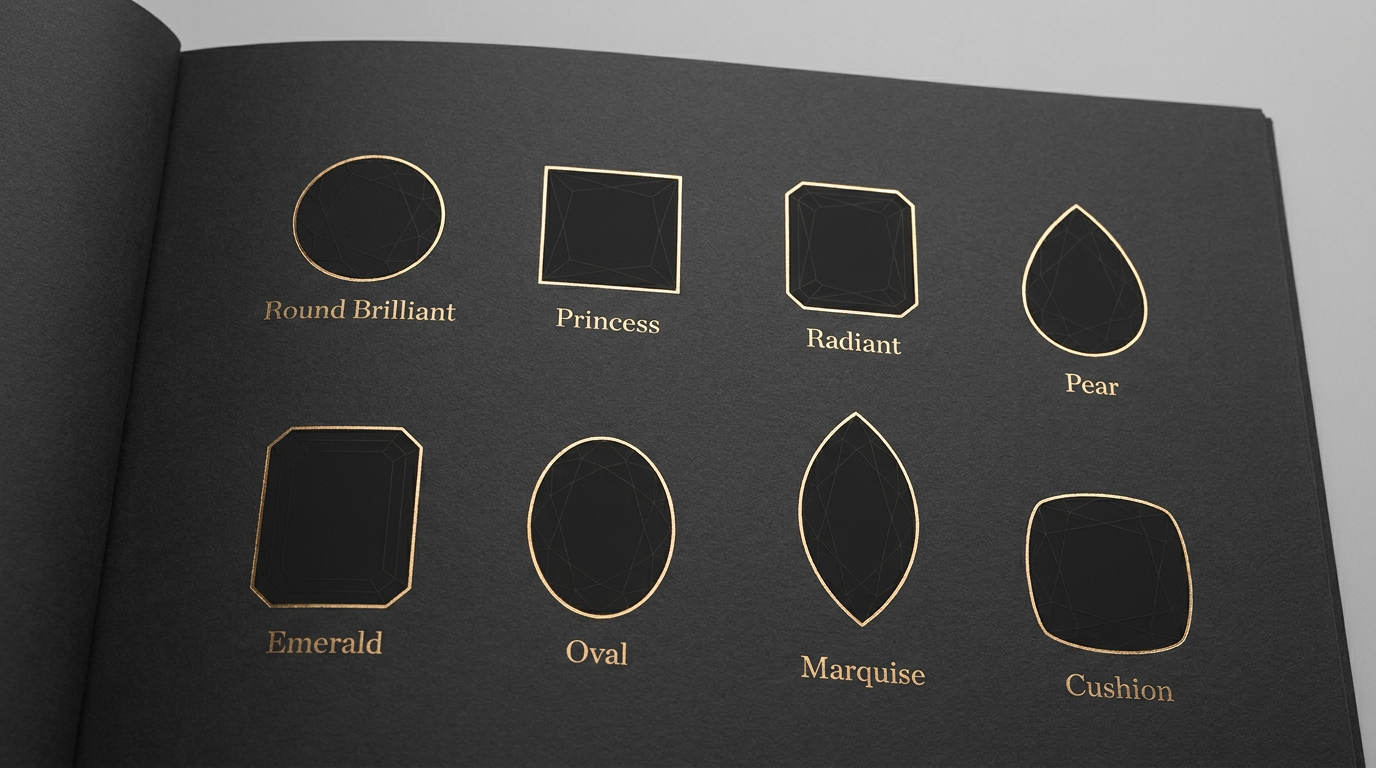
Standard cuts in the category include Brilliant (round), Princess, Radiant, Pear, Emerald, Oval, and Marquise. Some shapes carry a cutting premium due to greater material loss during cutting. See our Diamond Shapes page for details.
Certification
Many memorial diamond providers use independent grading laboratories such as IGI or GIA to certify the finished diamond. This grading covers cut, colour, clarity, and carat — the same criteria applied to any diamond. See our Certification page for specifics on how we certify each stone.
It's worth being precise about what this certificate does and doesn't mean: it confirms the diamond's physical grade. It does not, and cannot, confirm carbon origin — see "Are Memorial Diamonds Ethical?" above.
Cost Considerations
Memorial diamond pricing is driven primarily by carat weight, with colour and cut as secondary factors. The Gem Chamber's current pricing runs ₹50,000 to ₹4,00,000 across 0.5–4 carats (see table above).
Choosing a Setting: Ring, Pendant, or Bracelet
See our Jewelry Settings page for available options.
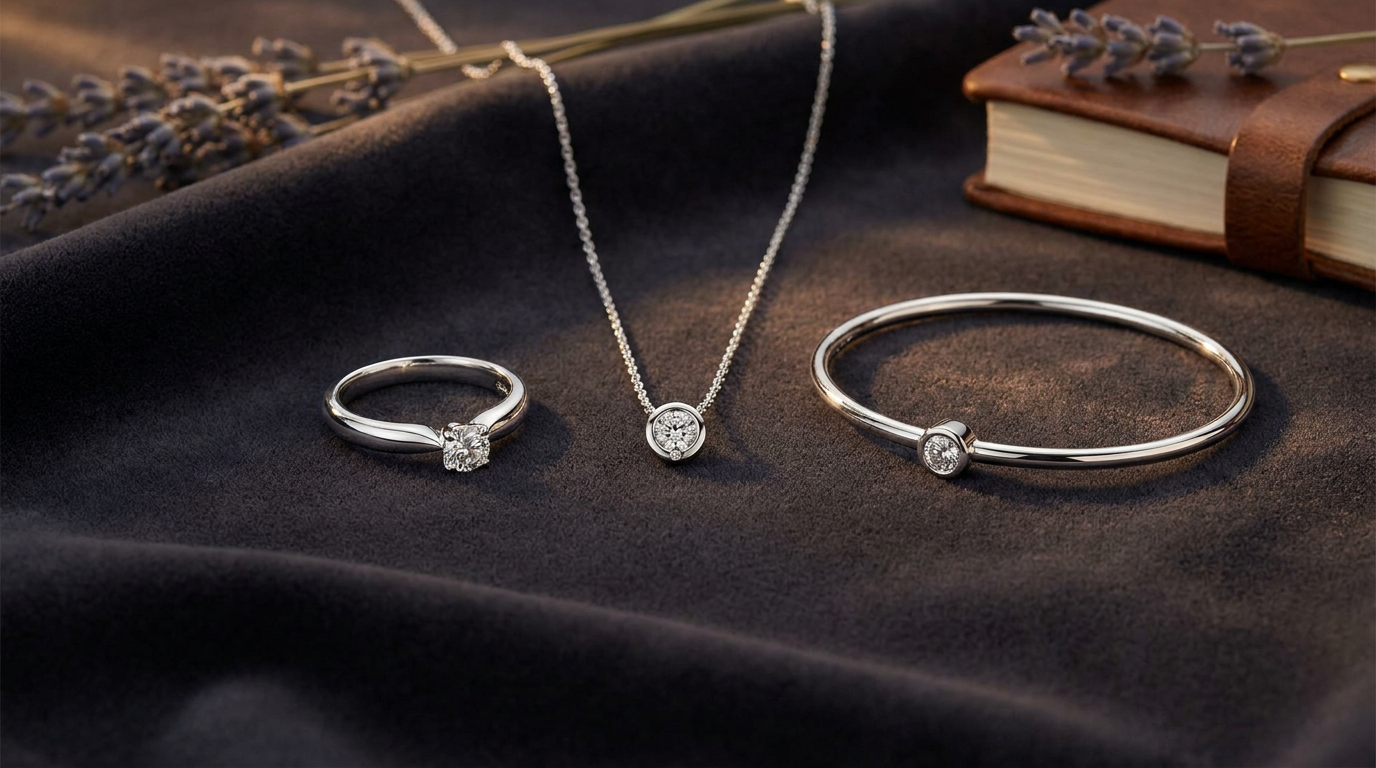
- Ring — worn most visibly and touched most often; a strong choice for a primary, everyday connection.
- Pendant — sits close to the heart, worn visibly or kept tucked away depending on the day.
- Bracelet — a lower-profile but still frequent point of contact.
Who Memorial Diamonds Are For
Memorial diamonds tend to suit people who want a wearable, permanent, daily point of connection to someone they've lost — alongside, or instead of, a fixed memorial like an urn. Bereavement researchers describe this as maintaining a "continuing bond" with someone who has died — through memory, ritual, or a meaningful object — and a substantial body of peer-reviewed grief literature now treats this as a normal, healthy pattern of remembrance rather than a sign of being unable to move forward.
They are not the right choice for everyone, and that's alright. Some families' traditions call for full release of ashes, and a memorial diamond — which uses only a small portion — can be understood as compatible with that practice, not a replacement for it.
Quick Comparison
| Feature | Memorial Diamond |
|---|---|
| Material | Hair or cremated remains |
| Diamond Type | Lab-grown |
| Carbon Source | Memorial carbon |
| Certification | Independent grading laboratory |
| Wearability | Everyday jewellery |
| Longevity | Permanent |
Questions to Ask Your Provider
Whichever provider a family chooses, these are worth asking directly before committing:
- Is there a documented chain of custody from the moment the sample is received?
- How is the sample identified and tracked through the process?
- Which independent grading laboratory certifies the finished diamond?
- What happens if the sample provided turns out to be insufficient?
- What timeline should realistically be expected, in writing?
- What is included in the price, and what costs extra?
A provider willing to answer all of these clearly, in writing, before payment, is behaving the way this category should.
Why Choose The Gem Chamber?
We believe a memorial diamond should be judged by the same standard as any other decision this personal: honesty about what can be promised, and care in everything that can be controlled. That means being direct about what the science can and cannot prove, transparent about our process from intake to certification, and attentive to the craftsmanship of the finished piece — because a diamond meant to be worn for a lifetime deserves to be made with that much intention.
Frequently Asked Questions
Is a memorial diamond a real diamond?
Yes. It is identical by every physical, chemical, and optical measure to any other lab-grown diamond.
How can I be sure the diamond is really made from my family member's carbon?
No lab can currently prove carbon origin after a diamond is grown. What can be verified is a provider's documented handling process — we're happy to walk you through ours.
How much ash or hair do I need to send?
This varies by carat target and material — we'll confirm the exact amount for your order during consultation.
How long will it take?
Typically a few months to about a year, depending on carat and colour — we'll give you a specific timeline for your order.
Will it come with a certificate?
Yes, the finished stone is independently graded, confirming its cut, colour, clarity, and carat — not its carbon origin, which cannot be independently verified by anyone in this category.
Can more than one family member receive a diamond from the same sample?
This depends on the sample size and carat targets involved — we can talk through options for your family.
Is it against tradition to keep back ashes instead of a full ritual release?
Many families set aside only a small portion for a memorial diamond, with the remainder still completing whatever ritual or practice they follow. Families with specific religious guidance on this should consult it directly.
Can a memorial diamond be passed down to future generations?
Yes — a diamond does not degrade, and can be reset or passed on like any heirloom piece.
Continue Exploring
- HPHT vs CVD: How Memorial Diamonds Are Made
- How It Works
- Create Your Diamond
- Shipping & Timeline
- Care Guide
- Memorial Stories
- Full FAQ
Conclusion
Every memorial diamond begins with a story. If you're considering creating one for someone you love, we're here to answer your questions with honesty, transparency, and care — helping you create a lasting tribute that reflects their legacy.
References: GIA (Gemological Institute of America) research on HPHT and CVD diamond growth; McGill University Office for Science and Society; Global Claims Associates industry investigation; Klass, Silverman & Nickman (1996), Continuing Bonds: New Understandings of Grief; Death Studies (Taylor & Francis) systematic review on continuing bonds.


Quote of the Day
Style is more than what we wear or how we decorate our spaces — it’s the freedom to choose what reflects who we are. Every design, every detail, is crafted with intention: to inspire joy, to add meaning, and to transform the everyday into something extraordinary. Because when comfort meets elegance, life itself feels more beautiful.
Brand Description
[Content]